





LAGOS – GoLemon, the Nigerian grocery delivery startup founded by four former Paystack executives, is shutting down, becoming the fourth notable Nigerian startup this year to close or pause operations amid a prolonged funding squeeze across the continent’s tech ecosystem.
The company, led by CEO Yinka Adewuyi, stopped accepting new orders earlier this month and has since begun winding down the business. In messages sent to customers, GoLemon said it had explored ways to keep the company running but could not secure the additional funding needed to continue.
“While this isn’t the outcome we hoped for, we’re incredibly grateful for every order and every opportunity we had to serve you,” the company told customers. 
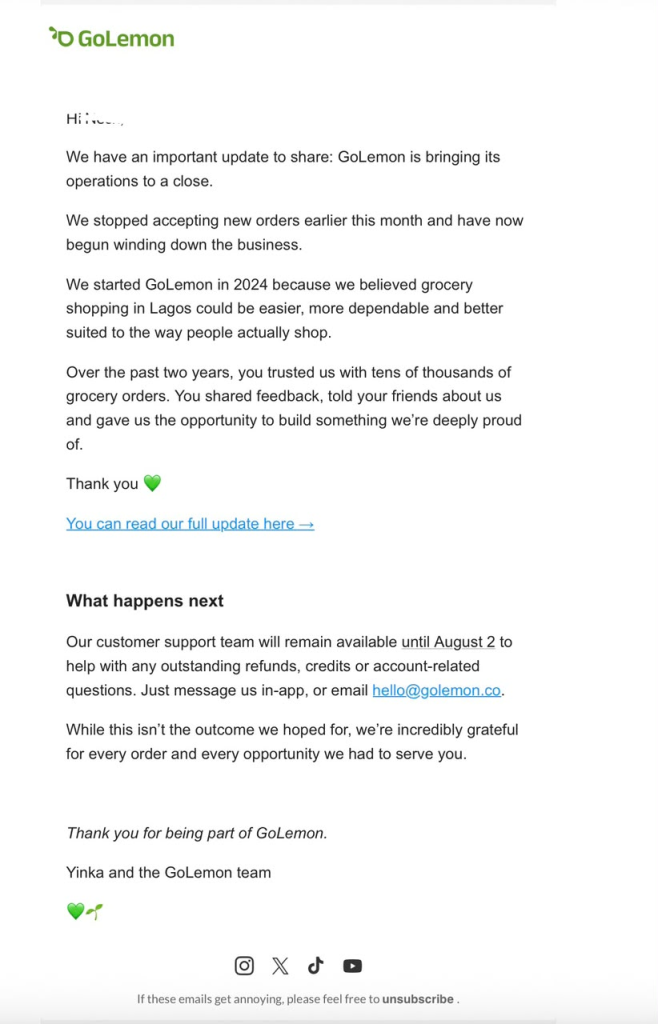
Two Years, Tens of Thousands of Orders
GoLemon launched in 2024, built by Adewuyi and three other former senior Paystack managers, Gbadebo Gbade-Oyelakin, Abdulrahman Jogbojogbo and Abiola Showemimo, who set out to make grocery shopping in Lagos more dependable. Over the following two years, the startup completed tens of thousands of deliveries across the city, built its own fulfilment and sourcing infrastructure, and, as recently as December 2025, partnered with rival delivery platform Chowdeck to supply groceries to Chowdeck’s dark stores.
In its message to customers and staff, the company said it had worked to support its team through the shutdown, with roughly 20% of employees having already secured new roles elsewhere. GoLemon said it would continue helping remaining staff find new positions in the coming weeks, and invited companies hiring across fulfilment, engineering, product, growth, customer support and finance to reach out about potential hires.
Customer support will remain available through Sunday, August 2, to handle outstanding refunds, credits and account-related questions, GoLemon said. At this time, business or supplier inquiries are being directed to a separate email address.
Part of a Wider Pattern
GoLemon’s closure adds to a growing list of Nigerian startups that have shut down, paused operations or sought acquisitions in 2026, as early-stage funding across the continent tightens even as overall capital deployed has modestly grown.
Gigbanc: A cross-border payments platform for freelancers and remote workers, announced in July that it was winding down operations after three years, citing the difficulty of raising fresh capital for a business with high compliance and infrastructure costs. The company said it was in acquisition talks with an undisclosed Nigerian fintech infrastructure provider and gave customers until July 31 to withdraw their funds. Over its lifetime, Gigbanc said it had served more than 150,000 users across over 30 countries and processed more than ₦10 billion in transactions.
Chimoney: A Techstars-backed fintech offering multi-currency payout infrastructure, ceased processing new transactions on April 30 after failing to raise enough capital to sustain the business, having raised less than $1 million over four years. Founder Uchi Uchibeke said the company chose to shut down in a structured way while it could still return client funds, with a refund window remaining open through August 31.
FoodCourt: A Y Combinator-backed cloud kitchen operator, suspended operations in March after unpaid salaries and mounting vendor debt triggered a kitchen staff strike in Lagos. By April, the company’s last remaining branch had shut down as it sought fresh funding. Unlike the other companies on this list, FoodCourt has said the pause is not permanent. According to the company CEO Henry Nneji, the company intends to relaunch once it completes a broader restructuring.
Why the Closures Are Piling Up
The wave of shutdowns comes despite a modest uptick in overall startup funding across Africa. According to TechCabal Insights, African startups raised $1.44 billion in the first half of 2026, up slightly year-on-year, but the number of disclosed funding deals fell sharply, from 252 in the first half of 2025 to 146 this year. The figures point to investors concentrating capital in fewer, often later-stage companies, leaving early-stage startups competing harder for a shrinking pool of checks.
For founders across Nigeria’s consumer tech and fintech sectors, that shift has translated into a harder question than simply building a good product. Finding enough capital and reaching profitability quickly enough to survive a funding climate that looks increasingly unforgiving for companies still finding their footing remains a big deal.

About The Author