A child goes out to play football. He doesn’t come home.
A young woman finishes her shift, steps into the evening, and is never seen alive again. A face familiar to everyone on the street becomes a photocopied poster stapled to a lamppost, missing.
At first, people dismiss the incidents as unfortunate coincidences. The first disappearance is a tragedy. Then another person vanishes. And another body is discovered. This is now a pattern, and the community stops pretending these are coincidences. 
Parents start walking their children to school. Taxi drivers become suspects. The market woman two doors down, the mechanic on the corner, everyone is a stranger now, and every stranger is a threat.
That is the devastating legacy of a serial killer. Beyond claiming lives, they rob communities of something equally precious—their sense of safety.
In Part One of this series, we explored the notorious killers and ritual murder cases that horrified Nigeria and South Africa. This second instalment takes us to East and Central Africa, where a different set of murderers left behind stories so disturbing that they continue to fascinate criminologists, investigators, and true-crime enthusiasts years later.
Dennis Kazungu: The House of Horrors That Shocked Rwanda
On the surface, the rented house in Kigali’s Busanza neighbourhood looked no different from the others surrounding it.
Neighbours saw a quiet motorcycle spare-parts dealer going about his daily routine. Nothing about the property suggested it concealed one of Rwanda’s most disturbing crime scenes.
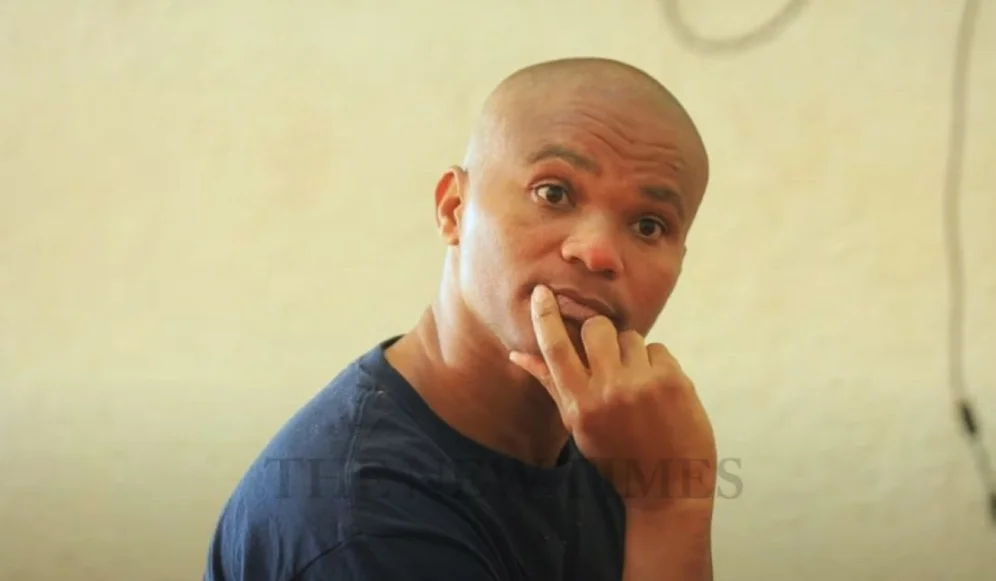
Everything changed in September 2023.
Police arrested Denis Kazungu, a 34-year-old businessman, after uncovering multiple bodies buried in a pit on the property he rented. What appeared to be an ordinary home quickly became the centre of one of Rwanda’s biggest criminal investigations in recent history.
According to investigators, Kazungu targeted mostly women whom he met in bars and other social venues. After gaining their trust, he invited them to his residence, where he robbed, sexually assaulted, and murdered them before burying their bodies in shallow graves within the compound. Police also revealed that he frequently used different identities and aliases to avoid suspicion and lure unsuspecting victims.
During court proceedings, Kazungu pleaded guilty to several charges, including murder, rape, robbery, and the concealment of bodies. He confessed to killing 14 people. Investigators recovered 12 bodies from the property, while two additional victims remained unaccounted for during the investigation.
In March 2024, a Rwandan court sentenced him to life imprisonment, bringing an end to one of the country’s most horrifying criminal cases in recent memory.
Masten Wanjala: The Child Killer Who Horrified Kenya
Every parent’s worst nightmare unfolded across Kenya in 2021.
Children disappeared without warning.
Some had gone out to play football with friends. Others left home to run simple errands and never returned. As days turned into weeks, desperate families flooded social media with photographs of missing sons, hoping someone, somewhere, had seen them.
Communities organised search parties while police pursued every available lead. The nation watched anxiously as the list of missing children continued to grow. Then, investigators made a discovery that sent shockwaves across the country.
Police arrested Masten Wanjala, a young man accused of luring children to their deaths in one of Kenya’s most disturbing serial murder investigations.
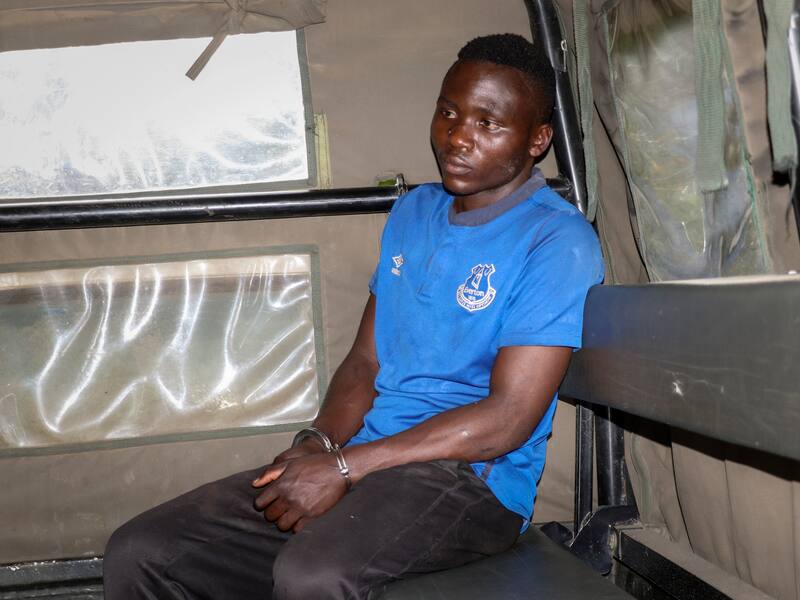
Authorities said Wanjala often gained the trust of his victims by pretending to be a football coach before leading them away from their families. During police interrogation, he confessed to a string of murders that stunned the nation.
Investigators recovered the bodies of at least four victims after Wanjala led detectives to the locations where he had dumped them.
His arrest on 14 July 2021 initially brought relief to grieving families. However, the case took another dramatic turn when he escaped from police custody on 13 October 2021, raising fresh concerns about public safety. The nationwide manhunt lasted only two days.
Residents of Mukhweya village in Bungoma County recognised Wanjala after he sought refuge in the area. Before police could rearrest him, an angry mob lynched him, bringing the chilling case to a violent end.
Although justice never reached the courtroom, the investigation exposed serious concerns about child safety, police procedures, and the protection of vulnerable children in Kenya.
See also: Africa’s Deadliest Serial Killers (Part One)
Sipho Thwala: The Phoenix Strangler
For many women living in and around Phoenix, north of Durban, South Africa, the promise of employment came with hope. For some, it became a death sentence.
During the mid-1990s, women searching for work began disappearing under mysterious circumstances. Many came from poor communities and eagerly accepted offers of jobs from a friendly stranger. They expected a chance to earn a living. Instead, they unknowingly walked into the hands of a serial killer.
That man was Sipho Thwala, later dubbed the Phoenix Strangler.
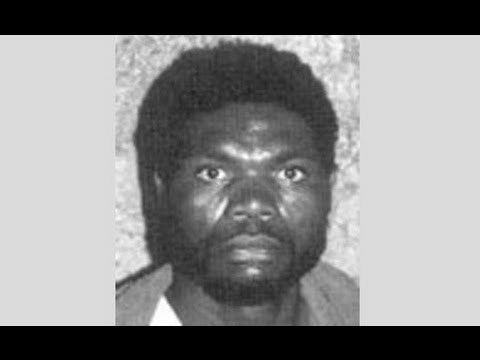
Between 1996 and 1997, Thwala preyed on vulnerable women by promising them employment before luring them to isolated locations. Investigators later revealed that he sexually assaulted and murdered many of his victims, abandoning their bodies in sugarcane fields and other secluded areas around KwaZulu-Natal.
As the number of missing women increased, fear spread rapidly across nearby communities. Families searched desperately for daughters, sisters and mothers who had simply left home in search of work but never returned. Police eventually connected the disappearances through painstaking investigations and witness accounts.
In 1997, authorities arrested Thwala, bringing an end to a killing spree that had left communities terrified. Following his trial, he was convicted of 19 murders, as well as multiple counts of rape and kidnapping. In 1999, the court sentenced him to 506 years’ imprisonment, ensuring he would spend the rest of his life behind bars.
The Phoenix Strangler case exposed the dangers faced by women seeking employment during difficult economic times. It also highlighted how serial killers often exploit trust and vulnerability rather than relying on force alone.
Today, Sipho Thwala remains one of South Africa’s most notorious serial killers, and his crimes continue to feature prominently in discussions of the country’s darkest criminal cases.
William Unek: The Policeman Who Became a Mass Killer
Long before forensic technology and criminal profiling transformed murder investigations, one man spread terror across two African countries while hiding behind the authority of a police uniform.
His name was William Unek.
Unlike many serial killers who confined their crimes to one location, Unek carried out two separate killing sprees hundreds of kilometres apart, making him one of the most unusual murderers in Africa’s criminal history. His first massacre took place in the Belgian Congo (now the Democratic Republic of the Congo) during the 1950s.
According to historical reports, Unek murdered 22 members of his own extended family during a gathering in Mahagi Territory. He reportedly believed they had used witchcraft to destroy his marriage, a belief that fuelled his brutal attack.
After the massacre, Belgian colonial authorities launched a manhunt, but Unek managed to escape across the border into Tanganyika, present-day Tanzania. There, he adopted a new identity.
Remarkably, he secured employment as a police constable under the British colonial administration, allowing him to evade capture while living an apparently ordinary life. For two years, his violent past remained hidden. Then history repeated itself.
Believing that his wife was involved in an affair with his superior officer, Unek embarked on another murderous rampage around Malampaka village. Armed with a rifle and an axe, he attacked men, women and children indiscriminately, killing 36 people.
The second massacre shocked colonial authorities and triggered an intensive nine-day manhunt involving police officers, local residents and security forces.
When officers finally tracked him down in 1957, Unek resisted arrest. During the confrontation, police shot and killed him, bringing one of Africa’s earliest documented serial murder cases to a dramatic end.
Historians estimate that William Unek killed 58 people, making him one of the deadliest murderers ever recorded on the continent.
His case remains an extraordinary chapter in African criminal history—not only because of the staggering number of victims but also because a man entrusted to uphold the law became one of its most violent offenders.
Why Africa’s Deadliest Serial Killers Continue to Fascinate Readers
Serial killers have long fascinated psychologists, criminologists and true-crime enthusiasts. Unlike crimes driven by robbery, revenge or personal disputes, serial murders are often difficult to explain. Many offenders appear to kill not for financial gain but because of a disturbing need for power, control or psychological gratification.
That mystery is one reason these cases continue to attract attention years, and sometimes decades, after the crimes were committed. However, the fascination goes beyond the killers themselves.
Each case offers valuable lessons about public safety, criminal investigations and the importance of community vigilance. Many also expose weaknesses in law enforcement systems, highlighting how missed warning signs, delayed investigations or limited forensic resources can allow dangerous offenders to continue operating for months or even years.
Across Africa, several high-profile serial murder investigations have prompted improvements in policing, criminal profiling and public awareness. They have also encouraged communities to report suspicious behaviour more quickly and support vulnerable individuals before tragedy strikes.
The Victims Behind the Headlines
Behind every headline, police investigation, and courtroom verdict were real people whose lives ended far too soon. They were daughters searching for work. Children playing with friends. Mothers returning home to their families.
Neighbours who left home expecting an ordinary day but never came back.
Although serial killers often become infamous because of the scale of their crimes, the true story is not about the perpetrators. It is about the victims whose dreams, ambitions and futures were stolen.
The families of Denis Kazungu’s victims continue to live with painful memories. Parents across Kenya still remember the fear that gripped the country during the Masten Wanjala investigation. In South Africa, the Phoenix Strangler case remains a reminder of how easily vulnerable women can become targets of violent predators. Even decades later, William Unek’s killing sprees remain one of the darkest chapters in East and Central Africa’s criminal history.
Remembering these victims honours their lives instead of allowing the killers to define the narrative.
The Lasting Legacy of Africa’s Deadliest Serial Killers
The crimes committed by Africa’s deadliest serial killers left scars that extended far beyond the immediate victims. Communities lost their sense of security. Parents became more protective of their children.
Women grew increasingly cautious when accepting offers from strangers. Neighbours who once trusted one another began living with fear and suspicion.
In several cases, these investigations exposed gaps in policing and public safety, prompting authorities to strengthen investigative procedures and encourage greater cooperation between law enforcement agencies and local communities.
Today, these cases remain important chapters in Africa’s criminal history. They are studied not only because of their brutality but also because they reveal how vulnerable societies can become when dangerous individuals exploit trust, fear and opportunity.
Ultimately, the stories of Africa’s deadliest serial killers should serve as more than accounts of shocking crimes. They should remind us of the importance of vigilance, effective policing and community cooperation in protecting the most vulnerable members of society.
As long as these lessons are remembered, the victims will never be reduced to mere statistics, and their stories will continue to inspire conversations about justice, safety and the value of every human life.

About The Author