





The Federal Road Safety Corps (FRSC) was created to improve road safety in Nigeria, enforce traffic regulations, reduce accidents, and ensure drivers comply with basic vehicle and driving requirements on Nigerian roads.
But for many Nigerians, encounters with FRSC officials often come with fear, confusion and arguments over fines, and in some cases, pressure to “settle” officers on the roadside without properly understanding the actual offence committed.
That conversation recently resurfaced online after a X “formerly twitter” user OpeyemiDrift shared his experience involving FRSC officials during a stop on the road. 
According to his post on X, FRSC officers stopped him during a routine check and discovered that his fire extinguisher was missing from his vehicle. He explained that the officers allegedly threatened to impound the car unless he paid ₦50,000 on the spot.
The situation reportedly changed after he informed them that the offence itself officially carried a much lower penalty of ₦3,000 and insisted they issue him a proper ticket instead.
His post quickly gained attention online, not just because of the alleged demand, but because many Nigerians admitted they do not actually know the official FRSC penalties attached to several common traffic offences.
Lack of awareness is one of the problems that drivers face in Nigeria, especially when they encounter FRSC. A lot of drivers tend to panic immediately once they hear words like, “We will seize your car.” “Pay ₦50,000”, “This offence is serious.”
Many road users do not know the actual penalties attached to basic offences under FRSC regulations.
For example, failure to carry a valid fire extinguisher in a vehicle is generally classified under safety violations and attracts an official fine far lower than the ₦50,000 figure allegedly mentioned during the encounter.
Other common offences Nigerian drivers are regularly stopped for include:
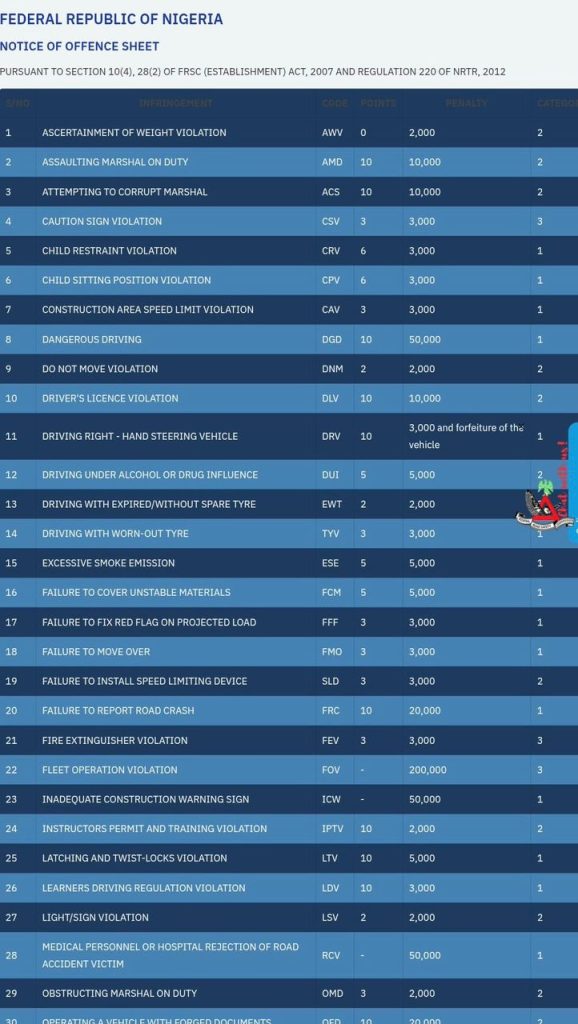
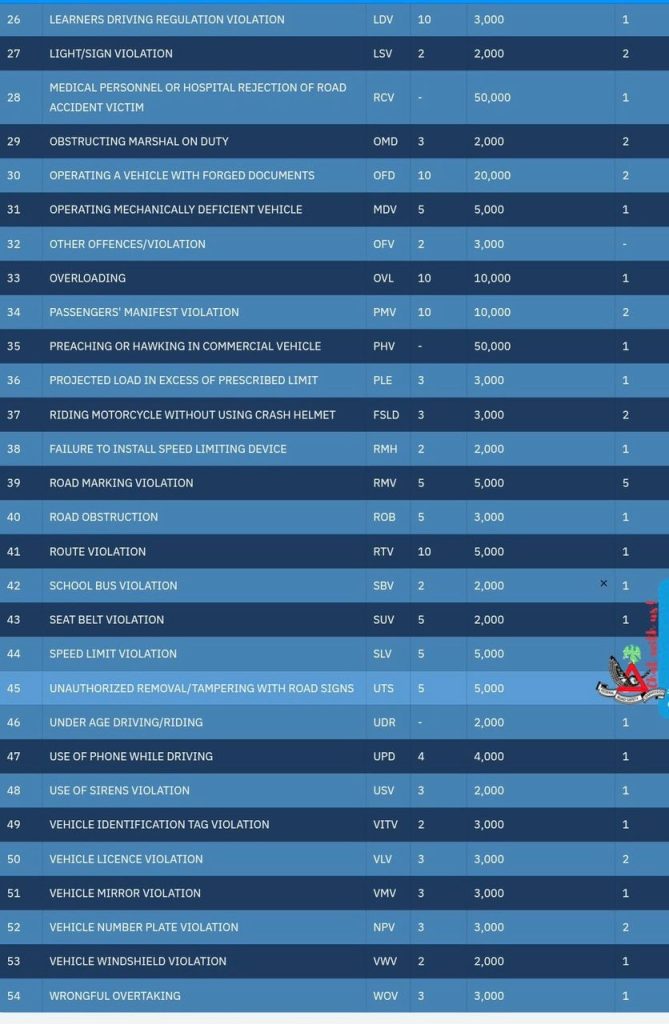
The severity of fines depends on the category of offence involved.
What many Nigerians also do not realise is that FRSC penalties are not supposed to function as random roadside bargaining conversations. Official penalties are tied to documented traffic offences with specific codes and approved fine structures.
Following his post, another user shared a breakdown of several FRSC offence codes and penalties online, leading to wider conversations around how little many drivers actually know about their rights during road stops.
Some Nigerians also pointed out that many drivers genuinely ignore important safety requirements until they are stopped by enforcement officers.
Road safety regulations are important. Missing safety equipment, dangerous tyres, reckless driving, and expired documents can genuinely put lives at risk on Nigerian roads.
Enforcement transparency also matters because once road users stop understanding where official penalties end and unofficial “settlements” begin, distrust naturally grows between the public and enforcement agencies.
Nigerians online are now encouraging drivers to become more familiar with official FRSC regulations, approved penalties, and their rights during traffic stops instead of relying entirely on roadside explanations given under pressure.
Sometimes, simply knowing the actual offence and the correct fine changes the entire conversation.
ALSO READ: Are Nigerian VIOs Allowed to Stop and Search Vehicles on the Road?

About The Author